



What if you could figure out how long it might take to double your money, how much you need to buy your dream home, or what it takes to build a ₹1 crore corpus? What if you could explore all this without getting lost in complicated financial jargon?
Managing money is about more than saving or investing in stocks. It’s about making informed choices today that help you work towards your future goals. From deciding how much to spend every month to figuring out where to invest your money, a little clarity can go a long way.
That’s where Smart Hacks on Millions comes in. Explore simple money management tips, investment calculators and practical ways to understand concepts like compounding, asset allocation and retirement planning. You can even discover stocks through brands you already know and love.
Ready to make more sense of your money? Let’s get into it.
1. Money Multiplier: Rule of 72, 114 and 144
Ever wondered how long it could take for your money to double, triple or quadruple?
The Rules of 72, 114 and 144 help you estimate how long it might take to grow your money based on an assumed annual rate of return. They’re a simple way to understand the power of compounding.
For example, at an illustrative annual return of 12%, your money could double in approximately 6 years. Try different return assumptions to see how they change the estimated time.
Remember, these are estimates based on a constant assumed return. Actual investment returns vary and are not guaranteed.

2. Ideal Investment Allocation: How to Balance Equity and Debt
How much of your money should you invest in equity, and how much should go into debt investments? Finding the right balance depends on your goals, risk appetite and investment timeline.
The 100 minus age rule offers a simple starting point for understanding asset allocation. Subtract your age from 100 to estimate the percentage you could allocate to equity, with the remainder allocated to debt.
For example, if you’re 30, the rule suggests 70% in equity and 30% in debt. This is only a rule of thumb, not a personalised investment recommendation. Your financial goals and ability to handle market fluctuations matter too.

3. Where to Invest Money: Explore Your Options
Stocks are just one way to invest your money. Depending on your goals and risk appetite, you can explore different investment options, including mutual funds, ETFs, gold, silver and liquid investment options.
Not sure where to begin? Use this hack to discover different avenues and learn more about the options available to you. Understanding what each option offers can help you make more informed investment decisions.
Before investing, take time to understand the risks, costs and suitability of each option for your financial goals.

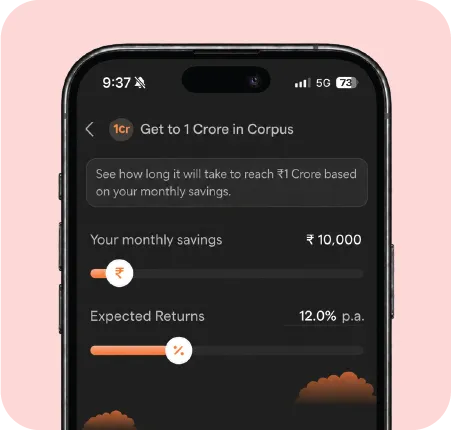
4. ₹1 Crore Investment Calculator: Plan Your Wealth Goal
Building a ₹1 crore corpus might seem like a distant goal. But breaking it down into monthly investments and time can make it easier to plan.
This hack lets you compare setting aside money without returns against investing with an assumed rate of return. For example, investing ₹20,000 every month at an illustrative annual return of 12% could help you build a corpus of around ₹1 crore in approximately 15 years.
Explore how your monthly investment, time horizon and assumed returns could change your journey towards ₹1 crore. You may find that starting early and investing consistently makes a meaningful difference to your long-term plan.
These figures are illustrative, not guaranteed outcomes. Actual returns will vary, and market-linked investments can lose value.
5. 50-30-20 Rule: How to Manage Your Monthly Expenses
Ever reach the end of the month and wonder where your money went? A simple budget can help you plan your spending, savings and investments more intentionally.
The 50-30-20 rule is one way to get started. It suggests dividing your monthly income into three categories:
- 50% for needs: Rent, groceries, bills and other essentials.
- 30% for wants: Dining out, shopping, entertainment and other lifestyle expenses.
- 20% for savings and investments: Money set aside for emergencies and long-term goals.
Enter your income to see what this split could look like for you. You can then explore how much you might be able to put towards a SIP every month.
This is a starting point, so adjust the percentages to suit your income, expenses and financial priorities.

6. Plan Your Dream Home: Calculate Your Budget and EMI
Buying a home is a big financial decision. Before you start browsing properties, it helps to understand how much you can afford, what your monthly EMI might look like and how much you may need for a down payment.
The 3/20/30/40 rule offers a simple framework to explore these numbers. It suggests a home budget of up to three times your annual income, a 20-year repayment period, EMIs within 30% of your income and a down payment of 40% of the home budget.
Use this hack to see how these numbers fit together and get a starting point for planning your home purchase.
Remember, this is a budgeting guideline rather than a lending rule. Actual affordability depends on your existing financial commitments, interest rates, loan eligibility and other costs associated with buying a home.

7. FIRE Calculator: Estimate Your Retirement Corpus
What would it take to become financially independent and retire on your own terms?
FIRE stands for Financial Independence, Retire Early. The idea is to build enough wealth to cover your living expenses without depending entirely on an active income.
The FIRE Calculator helps you estimate the retirement corpus you may need based on your monthly expenses, current age and desired retirement age. You can explore different goals, including Lean FIRE, Standard FIRE and FAT FIRE, to understand how your lifestyle and retirement plans affect the amount you may need.
Try different scenarios to see how your retirement target changes. It’s a starting point for thinking about long-term financial independence, not a guarantee of when you can retire.

Make Your Next Money Move with Millions
You don’t need to have every financial decision figured out before you get started. Sometimes, all it takes is the right question and a simple way to explore the answer.
Whether you want to understand compounding, plan your monthly budget, explore investment options or estimate your retirement corpus, Smart Hacks on Millions helps you break big money questions into smaller, more manageable steps.
Explore Smart Hacks, learn at your own pace and take the next step in your investing journey.