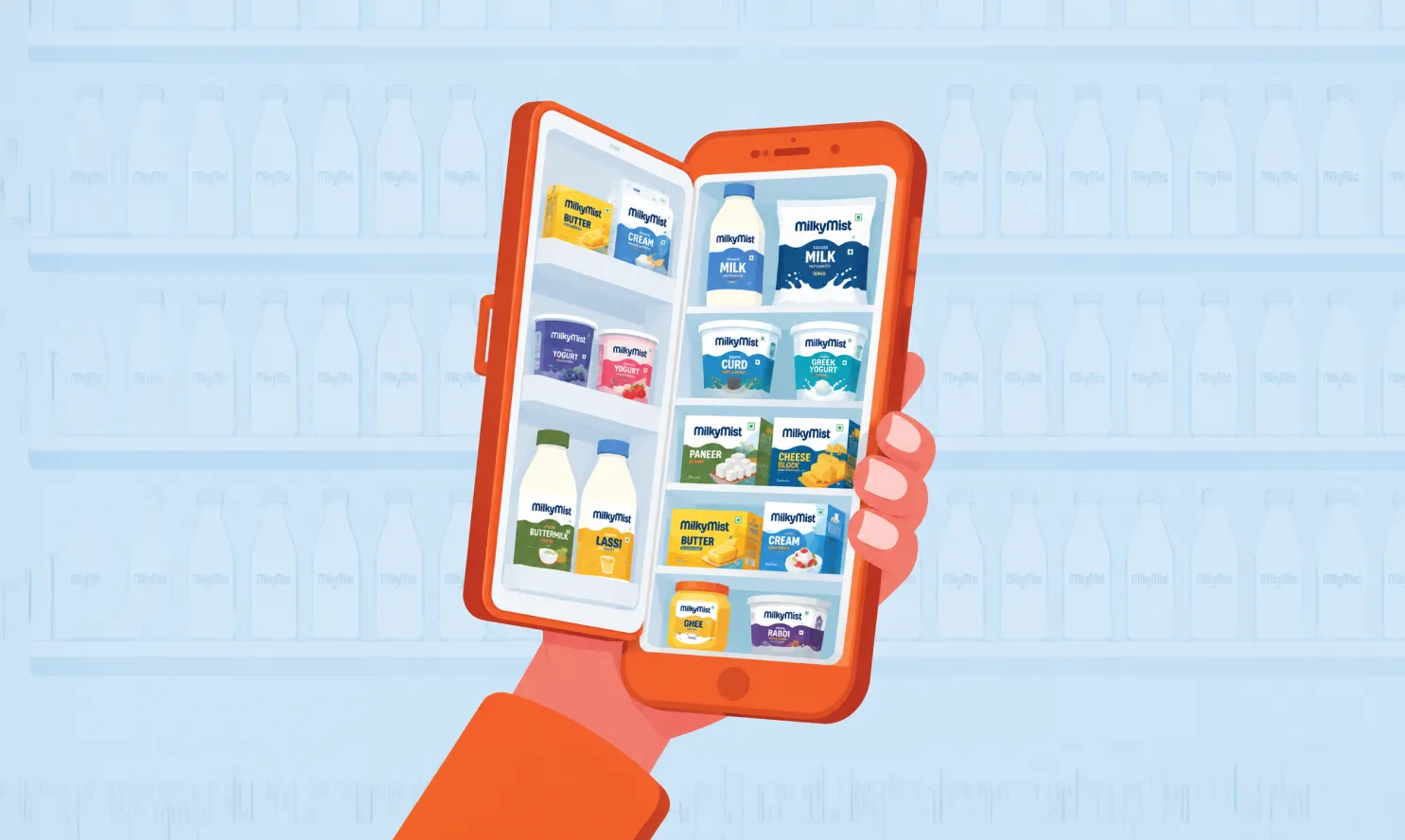


You've probably seen Milky Mist paneer or curd in your local supermarket. Well, the company behind it is about to go public. The South Indian dairy brand that you casually toss into your cart is now stepping into the stock market.
So, here’s the deal. Bidding for the Milky Mist Dairy Food IPO is scheduled to open on 11th August, 2026.
Subscribers can place their bid until 13th August, 2026. This is a book-built issue worth ₹1,553 crore, which is split between 10.20 crore shares worth a fresh issue, which would be raising ₹1,428 crore, and an offer for sale of 0.89 crore shares worth ₹125 crore. For the OFS, the money goes to the promoters who are selling their stake.
The price band for the Milky Mist Dairy Food IPO has been set from ₹133 to ₹140 per share. With a face value of ₹2, it comes in a lot size of 107 shares.
If you’re looking to put in your money as a retail investor, the maximum investment you can make is ₹14,980. Shares are likely to be allotted on August 14, 2026. If you get any shares, they’ll reflect in your demat account on 18th August, 2026. The shares will be listed both on the BSE and the NSE.
While JM Financial Ltd is the book-running lead manager here, KFin Technologies Ltd would be handling registrar duties.
Milky Mist Dairy Food IPO details
Milky Mist Dairy Food Limited was launched in 2014. In a little more than a decade, it has emerged as one of the fastest-growing packaged food companies in India.
It’s not just a random food company. Milky Mist Dairy Food has gone all in on value-added dairy, which means it doesn’t sell plain liquid milk. Instead, the company focuses on ready-to-use products that retain a higher margin.
Think about paneer, cheese, curd, butter, ghee, yoghurt, ice cream, UHT milk, and frozen foods. Then there are ready-to-eat and ready-to-cook meals, and even chocolates. All these products are sold under the flagship Milky Mist brand along with sub-brands like SmartChef, Capella, Misty Lite, Briyas, and Asal.
Here's a stat for you that actually says a lot.
The product lineup is genuinely massive too. As of 31st March, 2026, Milky Mist was selling across 22 categories and 640 SKUs. Moreover, the company rolled out 538 new SKUs between April 2022 and March 2026, which accounted for ₹883.67 crore of revenue in FY26.
Coming to the manufacturing side, Milky Mist runs an integrated farm-to-consumer setup. This means the company retains entire control over the process from the cow to your fridge.
In Tamil Nadu, its facility in Perundurai is heavily automated. It features robotic paneer production, UHT lines, an automated process of making cheese, and automated packing.
The installed capacity as of 31st March 2026 included:
Milky Mist procures milk directly from 74,654 farmers who are spread across 25 districts in Tamil Nadu, Andhra Pradesh, Karnataka, and Maharashtra. It is further backed by 3,907 automated milk collection units and 29 chilling centres. These centres test the milk several times before it reaches the factory floor.
Milky Mist procures milk directly from 74,654 farmers who are spread across 25 districts in Tamil Nadu, Andhra Pradesh, Karnataka, and Maharashtra. It is further backed by 3,907 automated milk collection units and 29 chilling centres. These centres test the milk several times before it reaches the factory floor.
What do the financials say?
The company also runs 63 milk tankers, 34 ambient trucks, and 282 refrigerated trucks. With a massive network of 4,001 distributors, its products reach 22 states and 5 Union Territories. Milky Mist also exports to more than 15 countries and has a workforce of 1,317 permanent employees.
From the financial perspective, its growth curve looks steep.
It’s a 176% Y-o-Y jump in the most recent year. The company plans to use the amount raised through the IPO as follows:
Should you apply for this issue?
For every IPO, investors must consider the trade-off between story and price tag. Have a look at the pros and cons of the upcoming IPO.
Pros of investing in Milky Mist Dairy Food
- Genuine leadership in the market: Milky Mist controls close to one-fifth of the organised paneer market in India. It’s strongly positioned in South India, producing large volumes of cheese, curd, and yoghurt. People already trust the brand and repeatedly buy their products.
- Product innovation engine: The company launched 538 new SKUs in four years, which contributed significantly to its revenue. This shows that it doesn’t just rely on legacy products to grow.
- Full control over the supply chain: Milky Mist owns most of the chain that may potentially eat into the margins of a good company. It owns its own fleet of refrigerated trucks and procures products directly from farmers.
- Sharp financial turnaround: The company recorded almost a threefold growth in PAT in FY26, while its ROE more than doubled. The debt-to-equity of Milky Mist improved from 4.20 to 3.61. The business is getting more efficient, not just expanding.
- Strong interest from anchor investors and brokers: The company raised ₹465.30 crore from anchor investors ahead of the issue. Four out of six brokers tracking the IPO have recommended investors to subscribe.
Cons of investing in Milky Mist Dairy Food
- Valuation looks stretched: The issue is priced at a post-IPO P/E of nearly 85 times at the upper price band against an EPS of ₹1.65. For a company that is still building its scale outside South India, it’s a premium price tag.
- One factory: Milky Mist currently produces all its offerings out of a single facility. In case of any operational, regulatory, or other kind of disruption, the entire business can be hit at once.
- Heavy dependency on the brand: Almost every product from the company is based on the brand name - Milky Mist. If the brand perception is tarnished for any reason, there’s no second brand to cushion the fall.
- Raw milk is a live risk: The entire business is dependent on a steady supply of milk at an affordable rate. In case milk supply is disrupted or prices rise, margins may have to be compromised.
Conclusion
Milky Mist has built something real here. The company has established brand recognition and commands a genuine share in the market. Its integrated supply chain and consistent profit trajectory are finally catching up to its growth in revenue. Considering a daily IPO, that’s quite impressive.
But the price tag is asking you to believe the growth continues at this pace. The business is still heavily dependent on one factory and one brand name.
If you’re comfortable with all this and are ready to stay invested for the long term, the IPO may be considered.
- Slow start to subscription: The issue was subscribed to just 0.37 times overall on the first day of the bidding. The QIB category hasn’t shown much interest.
- Risk of perishable inventory: Dairy products come with a limited shelf life and are perishable. Poor inventory management can lead to physical losses from spoilage.