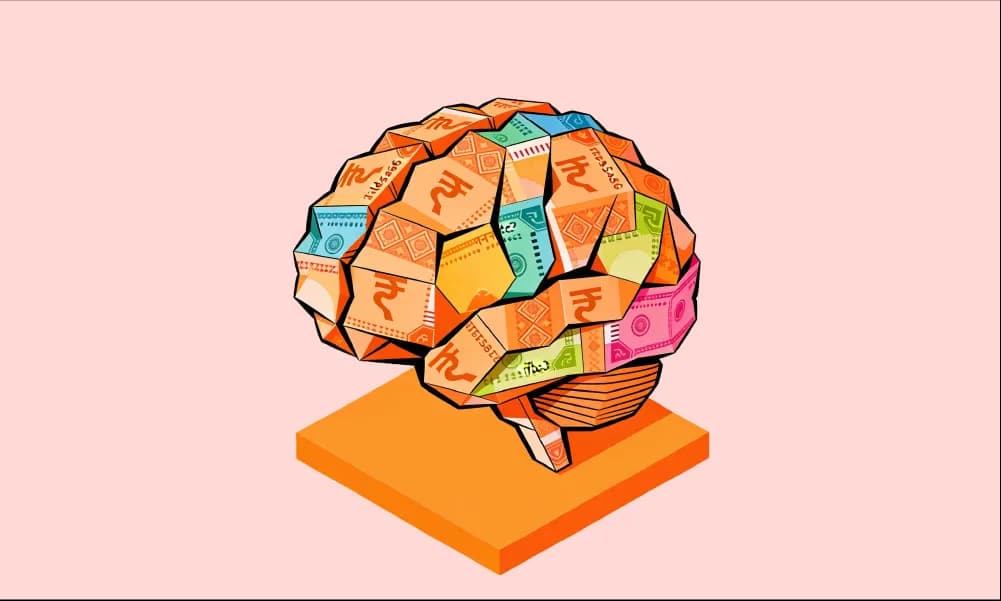


Everyone thinks that investing is a numbers game — better research, better stock selection, and trying to time the market. But after spending a lot of time in the market, one thing becomes clear:
The single greatest risk to your investment performance isn't the market. It's your own behaviour.
People panic amid corrections. They chase rallies when prices have already increased. They hold on to poor investments for too long. They ignore uncomfortable news. They benchmark their portfolio against strangers online and suddenly feel behind.
Investment errors never announce themselves as errors. A term exists for this phenomenon in behavioural finance — it is called bias. Over time, these biases cost investors much more than they expect.
1. Loss aversion makes investors hold bad investments longer than they should
We hate losses more than we love gains. That is what loss aversion means. A stock dropping 40% makes you feel much worse than a stock going up 40% makes you feel good.
Because losses feel very personal, people avoid taking them. They wait — perhaps it will bounce back, perhaps the market is overreacting, perhaps selling now will lock in the loss.
While their money stays locked in poorly performing stocks, better investment opportunities are missed. Ironically, the same investors often sell profitable stocks too early just to enjoy booking profits. This emotional imbalance silently undermines long-term gains.
2. Present bias makes long-term investing feel less important than immediate spending
Everyone knows that starting investments early is important, but very few act on it. This happens because of present bias — our natural preference for immediate gratification over long-term benefits.
Long-term gains feel far away and abstract, while immediate spending feels tangible and rewarding. Modern society constantly encourages short-term consumption through easy payments, lifestyle upgrades, and instant gratification.
As a result, saving gets delayed not because of lack of money, but because future rewards don't feel as real as present conveniences. This is costly because compounding depends heavily on time. Time lost early is very hard to regain later.
3. Herd behaviour makes crowded investments feel safer than they are
We feel more comfortable doing what other people are doing — especially with money. In rising markets, risk starts to feel normal. Popular investments suddenly seem safe simply because “everyone” is buying them.
This herd behaviour drives investors to jump into popular assets at market peaks and exit at the bottom. When everyone is optimistic, fear disappears. When everyone is scared, patience feels irresponsible.
But the market doesn't reward emotional agreement. By the time an investment becomes obvious to the crowd, the best opportunity is often already gone.
4. Confirmation bias makes investors protect their opinions instead of questioning them
Once people form a strong investing view, they start seeking information that supports it while ignoring anything that contradicts it. This is confirmation bias.
Positive news gets amplified. Negative news is dismissed. Contradicting opinions start to feel less credible. Eventually, investors stop thinking logically and begin defending their decisions emotionally.
Markets change constantly. Staying open to new information and adjusting your views is far better than stubbornly defending a position. Good investing demands research and flexibility, not emotional attachment.
5. Social comparison bias changes how investors define success
Investors no longer measure progress privately. They compare themselves to others — especially on social media where profit screenshots are everywhere.
Steady, consistent returns start to feel slow. Long-term investing feels boring. Regular wealth-building is no longer enough. This social comparison bias pushes people into risky, impatient, and emotionally driven decisions.
Not because their actual progress is poor, but because comparison distorts what “good” looks like.
Final Thoughts
Most investing errors are psychological first and financial second. Loss aversion creates emotional attachment. Present bias kills compounding. Herding removes logic. Confirmation bias destroys objectivity. Social comparison distorts goals.
Individually, none of these biases seem dangerous. But over years of decisions, they quietly reduce your returns far more than you realise. The market doesn't just test your intellect — it tests how well you handle uncertainty, discomfort, and emotions.