
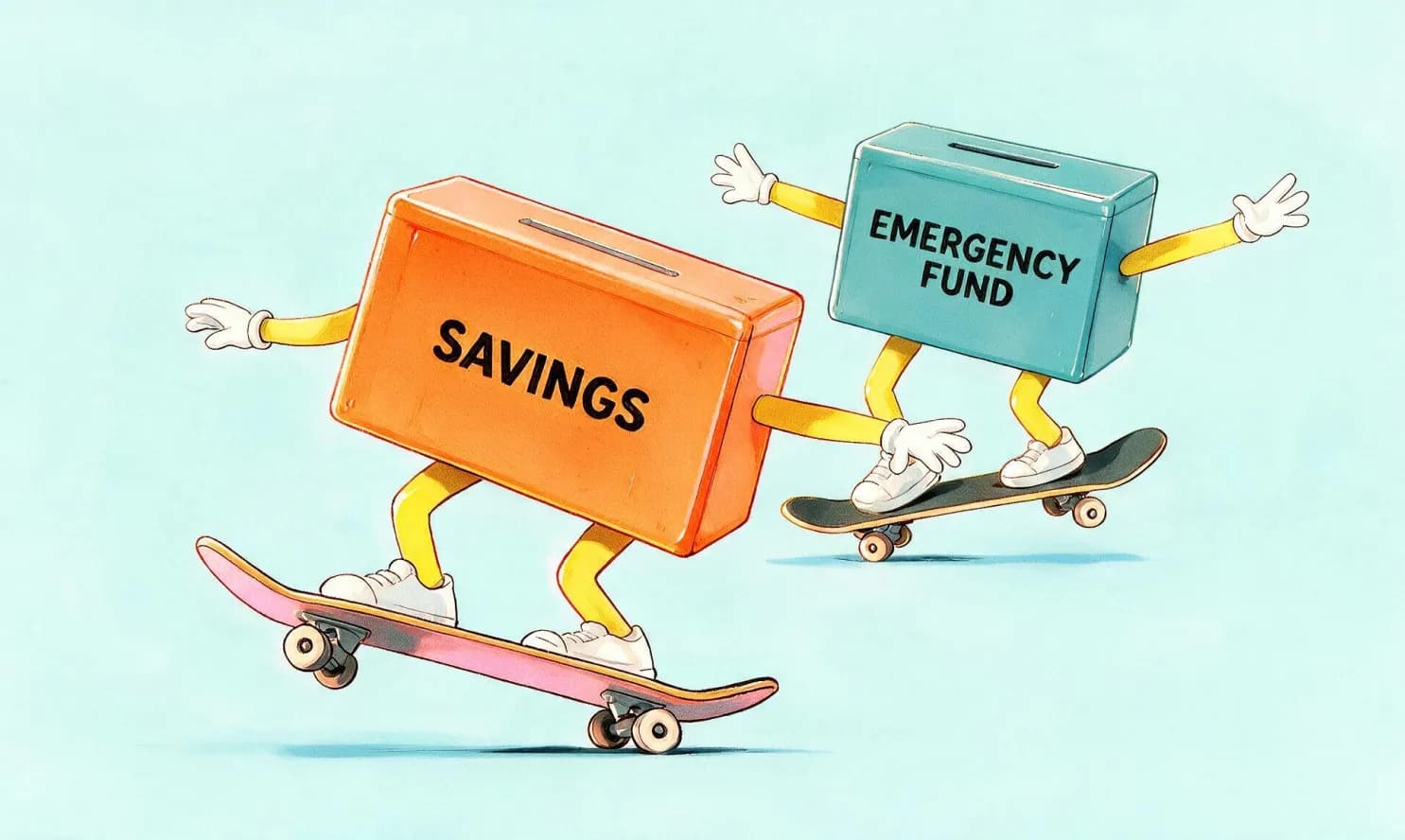


Why people often confuse the two
On the surface, an emergency account and a savings account seem to be the same. Both require setting aside money, and both enable you to access your money as required. That's why many first-time savers use these terms interchangeably.
When money is in a bank account, it's easy to think it's for the same purpose. However, the biggest difference is not where the money is kept. It is why the money is being saved.
Consider it in this manner. People can have ₹2 lakh in their bank accounts. One person has saved it for future home improvements, and one has constructed it in case of losing their job or falling sick.
Though it's the same amount, it's for totally different reasons. This is the first step to financial planning.
What is an emergency fund?
An emergency fund is exactly what its name suggests. It is money that is reserved in particular for sudden or unanticipated financial problems. Life is unpredictable. You can lose your job, a medical bill or immediate repairs to your house or car can come out of nowhere. These can happen out of the blue, and an emergency account will keep you from taking out a loan or using credit cards.
Here are a few examples of when an emergency fund can come in handy:
Medical emergencies
The unexpected cost of hospital visits or health care can strain your wallet. An emergency fund will provide an immediate financial boost when you need it the most.
Job loss
If your regular income stops unexpectedly, an emergency fund can help cover essential expenses until you find another source of income.
Urgent repairs
If your vehicle breaks down, or you have a leaky roof that can't wait, emergency funds can help you cover these costs and not derail the rest of your financial plans.
Family emergencies
Other reasons for urgent needs for cash may be unexpected travel, urgent caregiving needs or other family-related costs.
The key is to keep in mind that an emergency fund should only be used for emergencies. A holiday, a new phone or festival shopping may be important, but they are not emergencies.
What is a savings account?
One of the most popular banking products that are offered today is a savings account. Its main function is to give accessibility to the parked funds. A savings account can be used for a wide range of financial goals, whereas an emergency fund is for a specific purpose.
The largest benefit of a savings account is its convenience. It allows for deposits and withdrawals when needed, making it ideal for short-term financial needs and daily savings. In layman's terms, a savings account is where you hold your savings. Part of those savings can be for an emergency fund.
Emergency fund vs savings account: The key differences
The Emergency Fund vs Savings Account comparison is less about choosing one over the other and more about understanding how each supports different financial needs. When you know the purpose of each, it becomes much easier to organise your finances and avoid dipping into money meant for emergencies.
Do you need both?
An emergency fund and a savings account are not the same financial tool. They go hand in hand. Savings accounts can help you make daily payments and have surplus cash stored safely, and your emergency savings account can keep you from falling into a catastrophe.
Suppose you've saved ₹80,000 for the dream holiday for months. One week before your trip, your bicycle breaks down, and it costs ₹25,000 to fix. You spent a week before your trip repairing your bike, which cost ₹25,000.
Without an emergency fund, you are likely to have to cancel your holiday, delay your plans or pay for the repair with your credit card.
The emergency fund is for that very reason. It's there to help guard against life's surprises to your financial objectives.
You're not dipping into your savings to invest, but you have a reserve set aside in case you need it.
Separating these two goals also gives you peace of mind. You know your future plans remain on track, even if an unexpected expense comes your way.
Conclusion
While an emergency fund and savings account can sound the same, they serve entirely different financial goals. One is there to help you get ready for life's challenges, and the other is to help you with savings and expenses on a daily basis.
Knowing when and how to use each can help you deal with emergencies with more confidence and not compromise your long-term financial goals. Constructing both as part of your financial plan can boost monetary security, decrease monetary stress, and keep you prepared for anything.