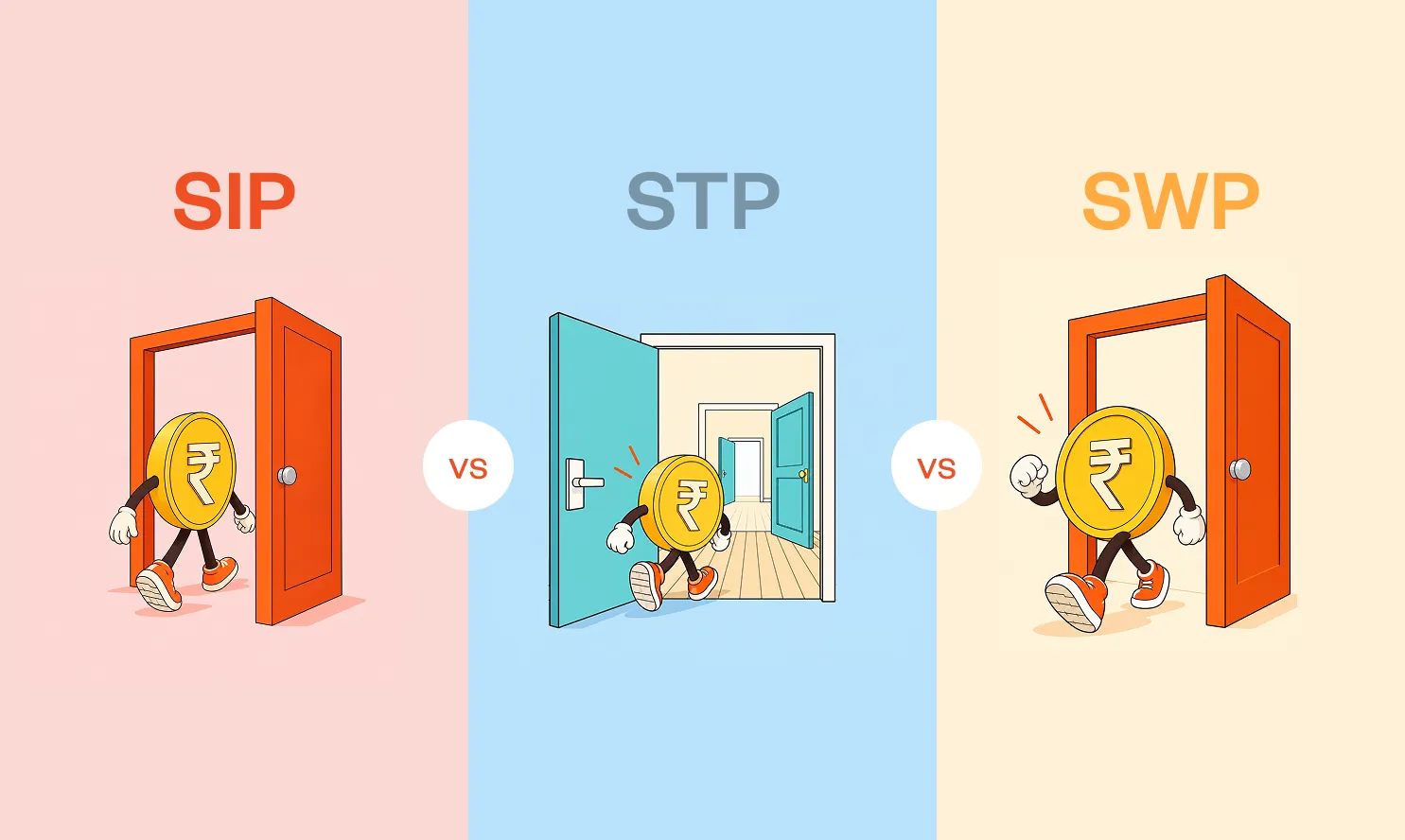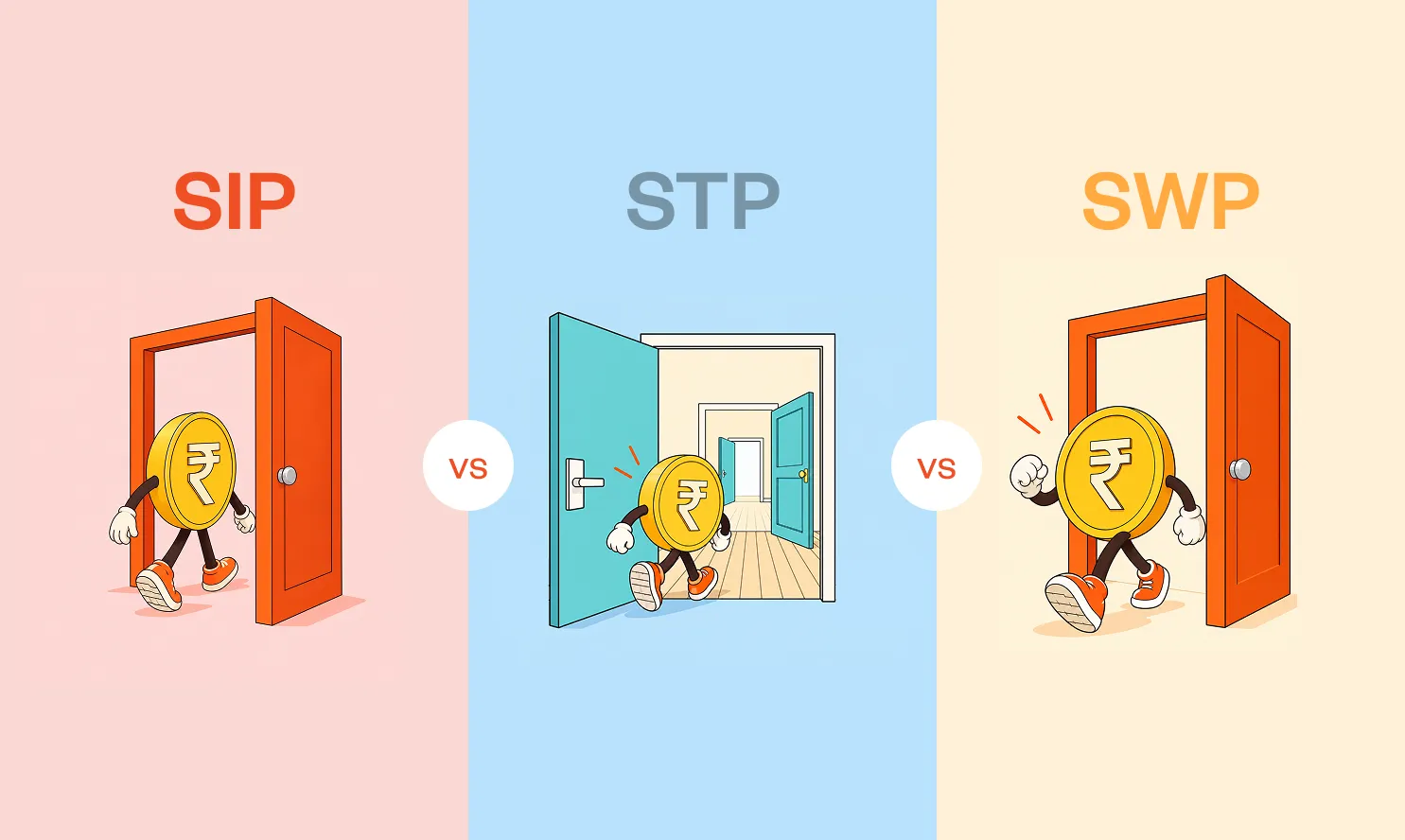



What is SIP?
A Systematic Investment Plan, or SIP, lets you invest a fixed amount in a mutual fund at regular intervals. You can choose to invest monthly, weekly, or daily. After you start a SIP, the money gets debited from your bank account automatically on the date you choose.
Some mutual fund schemes allow you to start a SIP with a minimum amount of just ₹100 a month. You can also change your SIP amount or frequency later. A SIP can help you invest regularly and work towards your long-term and short-term financial goals.
What is STP in mutual funds?
A Systematic Transfer Plan, or STP, is where you move money from one mutual fund scheme to another. This happens automatically at regular intervals, provided both schemes are offered by the same AMC. First, you invest the money in a source fund. Then, you set up an STP to move a fixed amount from that fund into a target fund every month.
Unlike SIP, STP doesn’t depend on fresh money coming from your bank account. It shifts funds from an investment you already have in another scheme.
SIP vs STP: Practical scenarios
An example of SIP
Suppose you’re saving ₹2,000 every month from your pocket money or salary towards a financial goal. You decide to put this money into a mutual fund scheme using a SIP. If you invest ₹2,000 every month for 10 years, you would have invested ₹2.4 lakh through 120 instalments.
Assuming an expected annual return of 12%, your investment could grow to around ₹4.64 lakh. However, this is only a SIP calculator estimate. The real-world value can be different due to various factors like market conditions and inflation. The whole idea is to save and invest on a regular basis.
An example of STP
Now suppose you already have ₹2.4 lakh and want to move it into an equity mutual fund. Instead of investing a lump sum amount at once, you plan to spread it over 24 months. Rather than keeping it in a bank account, you can invest it in a liquid fund and set up an STP to transfer ₹10,000 every month.
This way, your lump sum can earn returns in a liquid fund, while a fixed amount is transferred and invested in a target equity fund each month. By the end of 24 months, you would have transferred ₹2.4 lakh into the target fund.
SIP vs STP: A detailed comparison
Both plans help you invest in mutual funds, but the money comes from a different place. Here’s a side-by-side comparison of the two:
SIP vs STP: Which one should you consider?
The right choice for you depends on your situation. If you want to build a long-term investment from your regular savings, you can consider SIP. If you are able to set aside some money on a regular basis, like monthly or weekly, then setting up an SIP can be helpful. With SIP, you can work towards your goals such as higher education, buying a dream house, or building long-term wealth.
If you already have a lump sum, then STP can be a good option to consider. A large amount received as a bonus or from any other source can sit idle in a bank account until you invest it slowly via SIP. But STP can give you an opportunity to invest it right away into a liquid fund. A scheduled transfer can then move it gradually into your target fund. However, you should know that STP does not guarantee that your investment will earn better returns than a lump sum. It simply spreads the transfer through multiple instalments.
The bottom line
While investing in mutual funds, knowing the difference between SIP vs STP becomes important as they both serve different purposes. The right option depends on how you want to invest your money. If you want to invest a part of your savings every month, an SIP can help. If you have a lump sum ready and prefer to shift it into another fund in small instalments, an STP is a great option.
Either way, you should explore various mutual fund schemes to choose the right one for your needs. You can compare schemes on the Millions app and invest using the method that seems comfortable. Start with an amount you can manage and learn how the investment works. Later, you can modify as your savings grow and goals change.