
3 year average returns
no. of funds
Index Funds are passively managed funds that mirror the exact composition and performance of a specific benchmark index. As they eliminate active fund management, their expense ratios are relatively much lower.
3 year average returns
no. of funds


invest in index funds
at 0% commission

Index funds refer to mutual fund schemes that are built to track a specific market index. Instead of a fund manager picking which securities go in the portfolio, the fund’s holdings are essentially shaped by the index it follows. In simple terms, an index is a defined basket of securities that represents a part of the market. The Nifty 50, for example, comprises 50 stocks across different sectors of the Indian economy. An index fund that tracks the Nifty 50 tries to match the performance of the Nifty 50 index, with minimal variance.
This is called passive investing because the goal is to mirror the benchmark rather than make active calls in an attempt to beat it. In India, Index funds have grown into a fairly large chunk of the mutual fund industry. As of June 2026, 375 index fund schemes managed an AUM of about Rs. 3.36 lakh crore.
Index funds might make sense for you if you:
When you invest in an Index fund, your money goes into a portfolio built to replicate or track a specific index - generally holding the securities in that benchmark in the proportions its strategy calls for.
Say you invest Rs. 35,000 in an Index fund.
If the benchmark index rises by 6%, so will your investment:
Rs. 35,000 + (Rs. 35,000 x 6%) = Rs. 37,100
If the index falls by 6%, your investment does too:
Rs. 35,000 - (Rs. 35,000 x 6%) = Rs. 32,900
Note that there may be a minor variance between the index's performance and the fund's performance due to tracking errors, expense ratios and transaction costs. It is important to filter out index funds with massive tracking errors, since their whole point is to replicate the index.
The term Index fund is an umbrella term covering several types of passive investments - the main thing that sets them apart is which benchmark they follow.
Thus, even though two Index funds may be ‘passive’, they may work very differently based on what they’re actually tracking.
Index funds have a few features that can work in an investor’s favour:
Being passive doesn’t make an Index fund risk-free. Here are some risks you should understand before investing:
How can you approach these risks?
The main difference between the two is how the portfolios are constructed and managed.
| Parameter | Index funds | Actively managed funds |
|---|---|---|
| Portfolio approach | Follows a specific index | Fund manager makes active investment choices |
| Primary objective | Track the chosen benchmark | Varies based on the scheme objective and strategy |
| Selection of securities | Driven by index composition | Determined by the fund manager |
| Changes in portfolio | Follows changes in the benchmark | Made as per the fund manager’s strategy |
| Costs | Generally lower Expense Ratios, capped at 1% by SEBI. | Higher Expense Ratios, up to 2.25%, depending on AUM slabs. Cost increase due to research and active fund management. |
Here are a few things to consider if you are planning to invest in an Index fund:
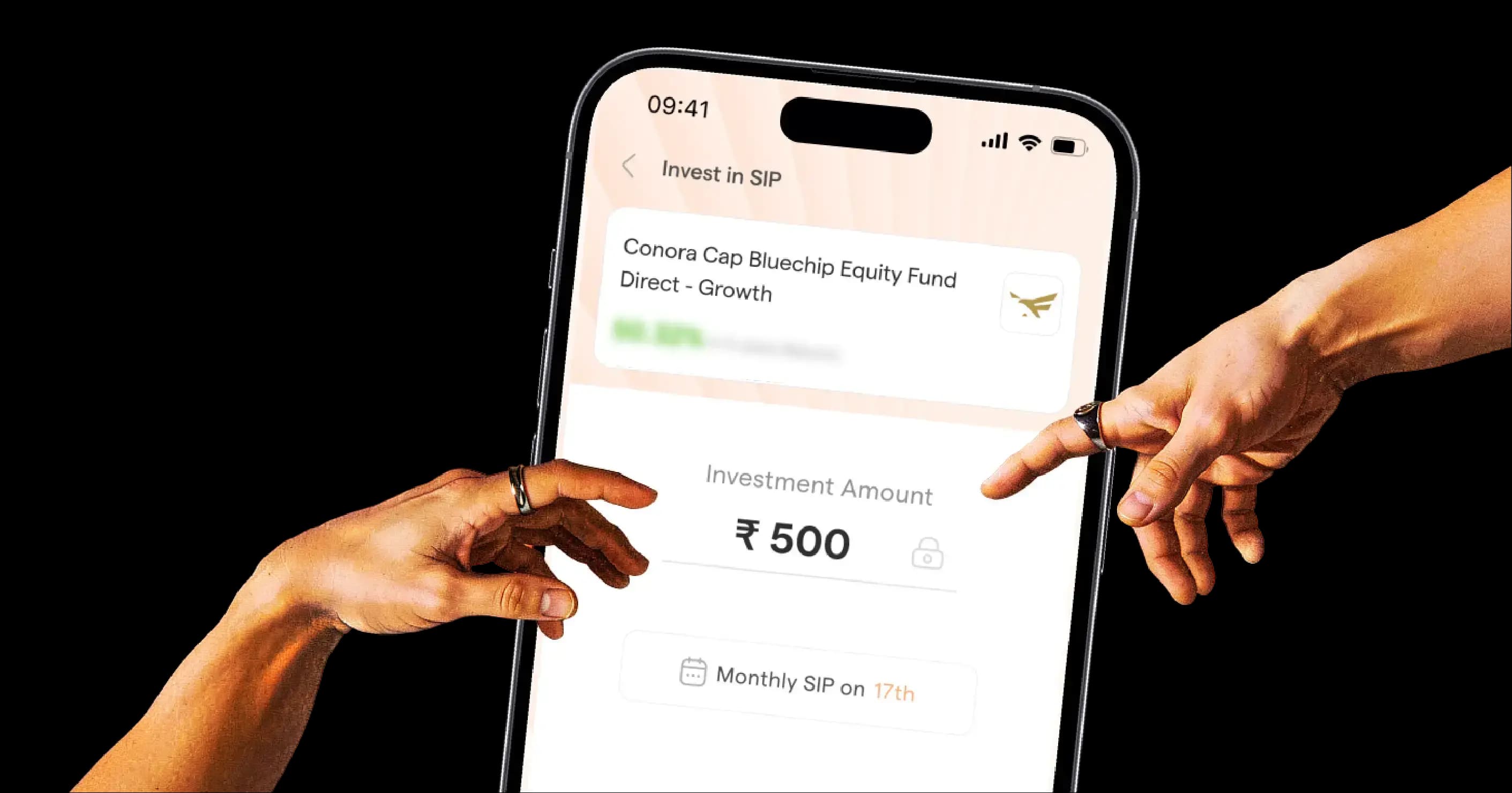
You can start investing in Index funds on Millions by following these steps:
It’s as simple as that. You do not need a large sum of money to start investing. Start small, and over time, increase your SIP amount.

need more help?
browse our support center for detailed guides and answers to common questions.
go to supportOpen your free Demat
account today

Open your
free Demat
account today

3 year average returns
9.05%
no. of funds
410
Index Funds are passively managed funds that mirror the exact composition and performance of a specific benchmark index. As they eliminate active fund management, their expense ratios are relatively much lower.
3 year average returns
9.05%
no. of funds
410

3Y returns
34.17%
5Y returns
-

3Y returns
28.47%
5Y returns
18.73%
3Y returns
20.52%
5Y returns
-

3Y returns
19.55%
5Y returns
-

3Y returns
19.18%
5Y returns
13.77%
3Y returns
18.56%
5Y returns
-

3Y returns
17.80%
5Y returns
12.24%

3Y returns
17.68%
5Y returns
-

3Y returns
17.65%
5Y returns
-
3Y returns
16.73%
5Y returns
-
invest in index funds
at 0% commission
Index funds refer to mutual fund schemes that are built to track a specific market index. Instead of a fund manager picking which securities go in the portfolio, the fund’s holdings are essentially shaped by the index it follows. In simple terms, an index is a defined basket of securities that represents a part of the market. The Nifty 50, for example, comprises 50 stocks across different sectors of the Indian economy. An index fund that tracks the Nifty 50 tries to match the performance of the Nifty 50 index, with minimal variance.
This is called passive investing because the goal is to mirror the benchmark rather than make active calls in an attempt to beat it. In India, Index funds have grown into a fairly large chunk of the mutual fund industry. As of June 2026, 375 index fund schemes managed an AUM of about Rs. 3.36 lakh crore.
Index funds might make sense for you if you:
When you invest in an Index fund, your money goes into a portfolio built to replicate or track a specific index - generally holding the securities in that benchmark in the proportions its strategy calls for.
Say you invest Rs. 35,000 in an Index fund.
If the benchmark index rises by 6%, so will your investment:
Rs. 35,000 + (Rs. 35,000 x 6%) = Rs. 37,100
If the index falls by 6%, your investment does too:
Rs. 35,000 - (Rs. 35,000 x 6%) = Rs. 32,900
Note that there may be a minor variance between the index's performance and the fund's performance due to tracking errors, expense ratios and transaction costs. It is important to filter out index funds with massive tracking errors, since their whole point is to replicate the index.
The term Index fund is an umbrella term covering several types of passive investments - the main thing that sets them apart is which benchmark they follow.
Thus, even though two Index funds may be ‘passive’, they may work very differently based on what they’re actually tracking.
Index funds have a few features that can work in an investor’s favour:
Being passive doesn’t make an Index fund risk-free. Here are some risks you should understand before investing:
How can you approach these risks?
The main difference between the two is how the portfolios are constructed and managed.
| Parameter | Index funds | Actively managed funds |
|---|---|---|
| Portfolio approach | Follows a specific index | Fund manager makes active investment choices |
| Primary objective | Track the chosen benchmark | Varies based on the scheme objective and strategy |
| Selection of securities | Driven by index composition | Determined by the fund manager |
| Changes in portfolio | Follows changes in the benchmark | Made as per the fund manager’s strategy |
| Costs | Generally lower Expense Ratios, capped at 1% by SEBI. | Higher Expense Ratios, up to 2.25%, depending on AUM slabs. Cost increase due to research and active fund management. |
Here are a few things to consider if you are planning to invest in an Index fund:
You can start investing in Index funds on Millions by following these steps:
It’s as simple as that. You do not need a large sum of money to start investing. Start small, and over time, increase your SIP amount.
need more help?
browse our support center for detailed guides and answers to common questions.
go to supportOpen your free Demat
account today
Open your
free Demat
account today


