
3 year average returns
no. of funds
Nifty next 50 funds are the funds that mirror the performance of stocks ranked 51st to 100th by market cap on the NSE. Combining relative stability with higher growth potential.
3 year average returns
no. of funds


Note: Past profits do not guarantee future returns.
invest in index funds
at 0% commission

The Nifty 50 may contain some of India’s most prominent listed companies, but the large company universe does not end there. The Nifty Next 50 represents another set of 50 companies within the Nifty 100.
Nifty Next 50 funds are passive mutual fund schemes that aim to track the performance of this index. Instead of a fund manager independently choosing which stocks to buy or sell, the portfolio is built around the companies and weights represented in the Nifty Next 50.
The index consists of the 50 companies in the Nifty 100 after excluding the Nifty 50 constituents. Together, the Nifty 50 and Nifty Next 50 therefore form the Nifty 100 universe.
The Nifty Next 50 follows a free float market capitalisation weighted methodology. This means the 50 companies do not have identical weights in the index. A company with a higher free float market capitalisation can have a greater influence on the index of the movement.
You can consider Nifty Next 50 funds if you are:
When you invest in a Nifty Next 50 fund, your money is pooled with investments made by other investors. The scheme then maintains a portfolio designed to follow the Nifty Next 50 index.
Suppose you invest Rs. 50,000 in a Nifty Next 50 fund.
If the value of your investment subsequently rises by 9%:
Rs. 50,000 + (Rs. 50,000 x 9%) = Rs. 54,500
If the value instead falls by 9%:
Rs. 50,000 - (Rs. 50,000 x 9%) = Rs. 45,500
This percentage movement is only being used to show how a change in fund value affects your investment. It is not an expected or guaranteed return.
A passive fund may also not deliver exactly the same return as its benchmark. Expenses and the practical process of maintaining the portfolio can create a difference between the returns of the funds and the index.
Understanding the underlying index is important because it determines what a Nifty Next 50 fund ultimately holds.
The starting point is the Nifty 100, which represents the top 100 companies based on full market capitalisation from the Nifty 500. The Nifty Next 50 represents the 50 companies remaining in the Nifty 100 after the Nifty 50 constituents are excluded.
| Parameter | Nifty Next 50 |
|---|---|
| Number of constituents | 50 |
| Starting universe | Nifty 100 |
| Composition | Nifty 100 constituents excluding Nifty 50 companies |
| Weighting method | Free float market capitalisation |
| Reconstitution | Semi-annual |
The index is reconstituted semi-annually, with scheduled changes becoming effective on the last working day of March and September.
When the benchmark changes, a fund tracking it adjusts its portfolio to remain aligned with the revised index.
Here is what Nifty Next 50 funds can offer:
The presence of these companies within the Nifty 100 does not remove the risks associated with equity investing:
Here are a few points to consider:
Despite both containing 50 stocks, the two indices represent different portfolios.
| Parameter | Nifty Next 50 | Nifty 50 |
|---|---|---|
| Number of stocks | 50 | 50 |
| Universe | Nifty 100 excluding Nifty 50 constituents | Top 50 eligible NSE-listed companies |
| Overlap between the two | None | None |
| Weighting | Free float market capitalisation | Free float market capitalisation |
| Reconstitution | Semi-annual | Semi-annual |
The two indices are designed as separate sets of companies within the broader Nifty 100 universe. While Nifty Next 50 funds track the companies outside the Nifty 50, Nifty 50 funds provide exposure to the 50 companies represented in the Nifty 50 index.
Neither index should automatically be treated as a better choice. The more relevant question is which exposure fits the role you want the investment to play in your portfolio.
There can be several schemes tracking the same benchmark. Instead of judging them only by recent returns, consider the following:
Once you have understood the benchmark and compared the available schemes, you can start investing through Millions:

No, the Nifty Next 50 is constructed from the Nifty 100 after excluding Nifty 50 constituents; it is not defined as a mid-cap index. The Nifty Midcap 150, for comparison, is specifically designed to represent companies ranked 101-250 from the Nifty 500 based on full market capitalisation.
Being part of the Nifty Next 50 does not guarantee that a company will later become a Nifty 50 constituent. Inclusion in the Nifty 50 depends on applicable eligibility and selection methodology when the index is reviewed.
Yes. Even when two funds follow the same index, differences in expenses and portfolio implementation can result in their returns varying slightly. This is one reason tracking information is useful when comparing schemes that follow the same benchmark.
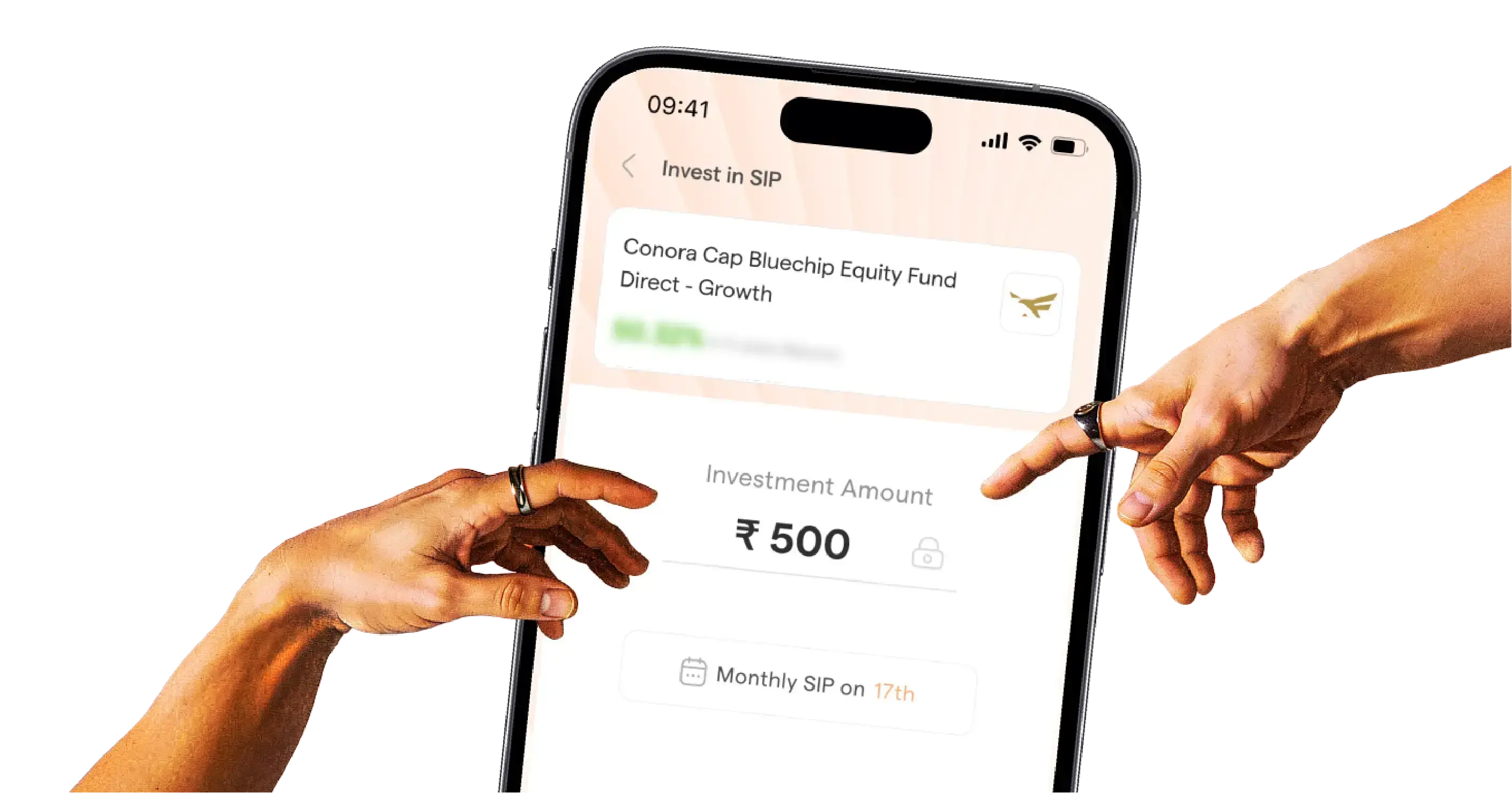
Many mutual fund schemes provide a SIP facility that allows investments to be made at regular intervals. The minimum investment amount, available frequency and other conditions can differ between schemes and platforms, so review the applicable details before setting up a SIP.
need more help?
browse our support center for detailed guides and answers to common questions.
go to supportOpen your free Demat
account today

Open your
free Demat
account today

3 year average returns
15.30%
no. of funds
19
Nifty next 50 funds are the funds that mirror the performance of stocks ranked 51st to 100th by market cap on the NSE. Combining relative stability with higher growth potential.
3 year average returns
15.30%
no. of funds
19

3Y returns
15.44%
5Y returns
-

3Y returns
15.40%
5Y returns
10.44%

3Y returns
15.40%
5Y returns
10.34%

3Y returns
15.38%
5Y returns
10.28%

3Y returns
15.34%
5Y returns
10.29%

3Y returns
15.34%
5Y returns
-

3Y returns
15.33%
5Y returns
10.26%

3Y returns
15.32%
5Y returns
10.33%

3Y returns
15.30%
5Y returns
-

3Y returns
15.28%
5Y returns
10.27%
Note: Past profits do not guarantee future returns.
invest in index funds
at 0% commission
The Nifty 50 may contain some of India’s most prominent listed companies, but the large company universe does not end there. The Nifty Next 50 represents another set of 50 companies within the Nifty 100.
Nifty Next 50 funds are passive mutual fund schemes that aim to track the performance of this index. Instead of a fund manager independently choosing which stocks to buy or sell, the portfolio is built around the companies and weights represented in the Nifty Next 50.
The index consists of the 50 companies in the Nifty 100 after excluding the Nifty 50 constituents. Together, the Nifty 50 and Nifty Next 50 therefore form the Nifty 100 universe.
The Nifty Next 50 follows a free float market capitalisation weighted methodology. This means the 50 companies do not have identical weights in the index. A company with a higher free float market capitalisation can have a greater influence on the index of the movement.
You can consider Nifty Next 50 funds if you are:
When you invest in a Nifty Next 50 fund, your money is pooled with investments made by other investors. The scheme then maintains a portfolio designed to follow the Nifty Next 50 index.
Suppose you invest Rs. 50,000 in a Nifty Next 50 fund.
If the value of your investment subsequently rises by 9%:
Rs. 50,000 + (Rs. 50,000 x 9%) = Rs. 54,500
If the value instead falls by 9%:
Rs. 50,000 - (Rs. 50,000 x 9%) = Rs. 45,500
This percentage movement is only being used to show how a change in fund value affects your investment. It is not an expected or guaranteed return.
A passive fund may also not deliver exactly the same return as its benchmark. Expenses and the practical process of maintaining the portfolio can create a difference between the returns of the funds and the index.
Understanding the underlying index is important because it determines what a Nifty Next 50 fund ultimately holds.
The starting point is the Nifty 100, which represents the top 100 companies based on full market capitalisation from the Nifty 500. The Nifty Next 50 represents the 50 companies remaining in the Nifty 100 after the Nifty 50 constituents are excluded.
| Parameter | Nifty Next 50 |
|---|---|
| Number of constituents | 50 |
| Starting universe | Nifty 100 |
| Composition | Nifty 100 constituents excluding Nifty 50 companies |
| Weighting method | Free float market capitalisation |
| Reconstitution | Semi-annual |
The index is reconstituted semi-annually, with scheduled changes becoming effective on the last working day of March and September.
When the benchmark changes, a fund tracking it adjusts its portfolio to remain aligned with the revised index.
Here is what Nifty Next 50 funds can offer:
The presence of these companies within the Nifty 100 does not remove the risks associated with equity investing:
Here are a few points to consider:
Despite both containing 50 stocks, the two indices represent different portfolios.
| Parameter | Nifty Next 50 | Nifty 50 |
|---|---|---|
| Number of stocks | 50 | 50 |
| Universe | Nifty 100 excluding Nifty 50 constituents | Top 50 eligible NSE-listed companies |
| Overlap between the two | None | None |
| Weighting | Free float market capitalisation | Free float market capitalisation |
| Reconstitution | Semi-annual | Semi-annual |
The two indices are designed as separate sets of companies within the broader Nifty 100 universe. While Nifty Next 50 funds track the companies outside the Nifty 50, Nifty 50 funds provide exposure to the 50 companies represented in the Nifty 50 index.
Neither index should automatically be treated as a better choice. The more relevant question is which exposure fits the role you want the investment to play in your portfolio.
There can be several schemes tracking the same benchmark. Instead of judging them only by recent returns, consider the following:
Once you have understood the benchmark and compared the available schemes, you can start investing through Millions:
No, the Nifty Next 50 is constructed from the Nifty 100 after excluding Nifty 50 constituents; it is not defined as a mid-cap index. The Nifty Midcap 150, for comparison, is specifically designed to represent companies ranked 101-250 from the Nifty 500 based on full market capitalisation.
Being part of the Nifty Next 50 does not guarantee that a company will later become a Nifty 50 constituent. Inclusion in the Nifty 50 depends on applicable eligibility and selection methodology when the index is reviewed.
Yes. Even when two funds follow the same index, differences in expenses and portfolio implementation can result in their returns varying slightly. This is one reason tracking information is useful when comparing schemes that follow the same benchmark.
Many mutual fund schemes provide a SIP facility that allows investments to be made at regular intervals. The minimum investment amount, available frequency and other conditions can differ between schemes and platforms, so review the applicable details before setting up a SIP.
need more help?
browse our support center for detailed guides and answers to common questions.
go to supportOpen your free Demat
account today
Open your
free Demat
account today


