

What are SIP bounce charges?
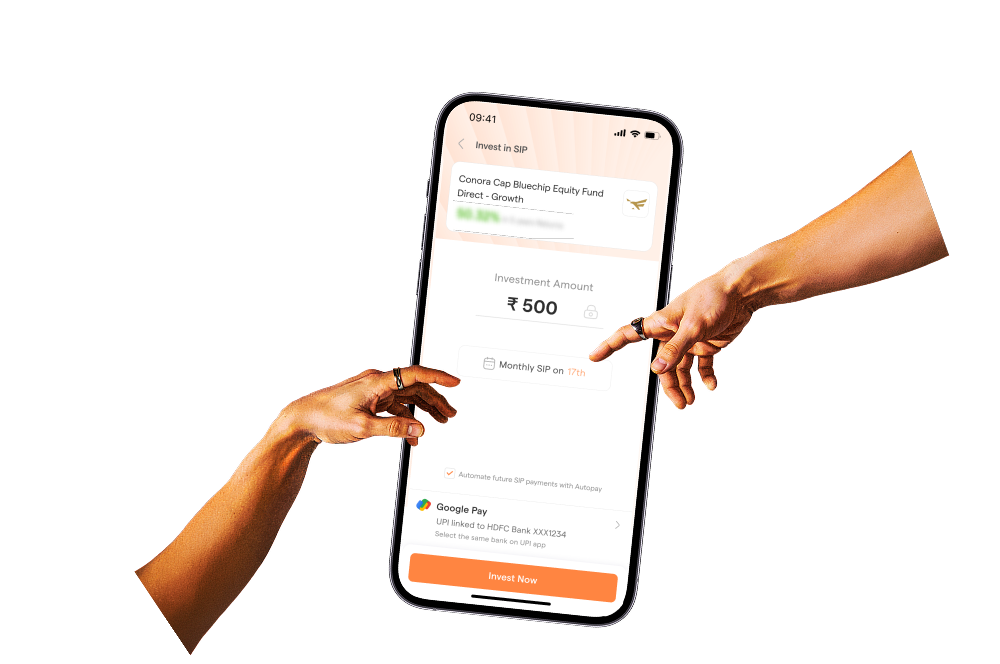
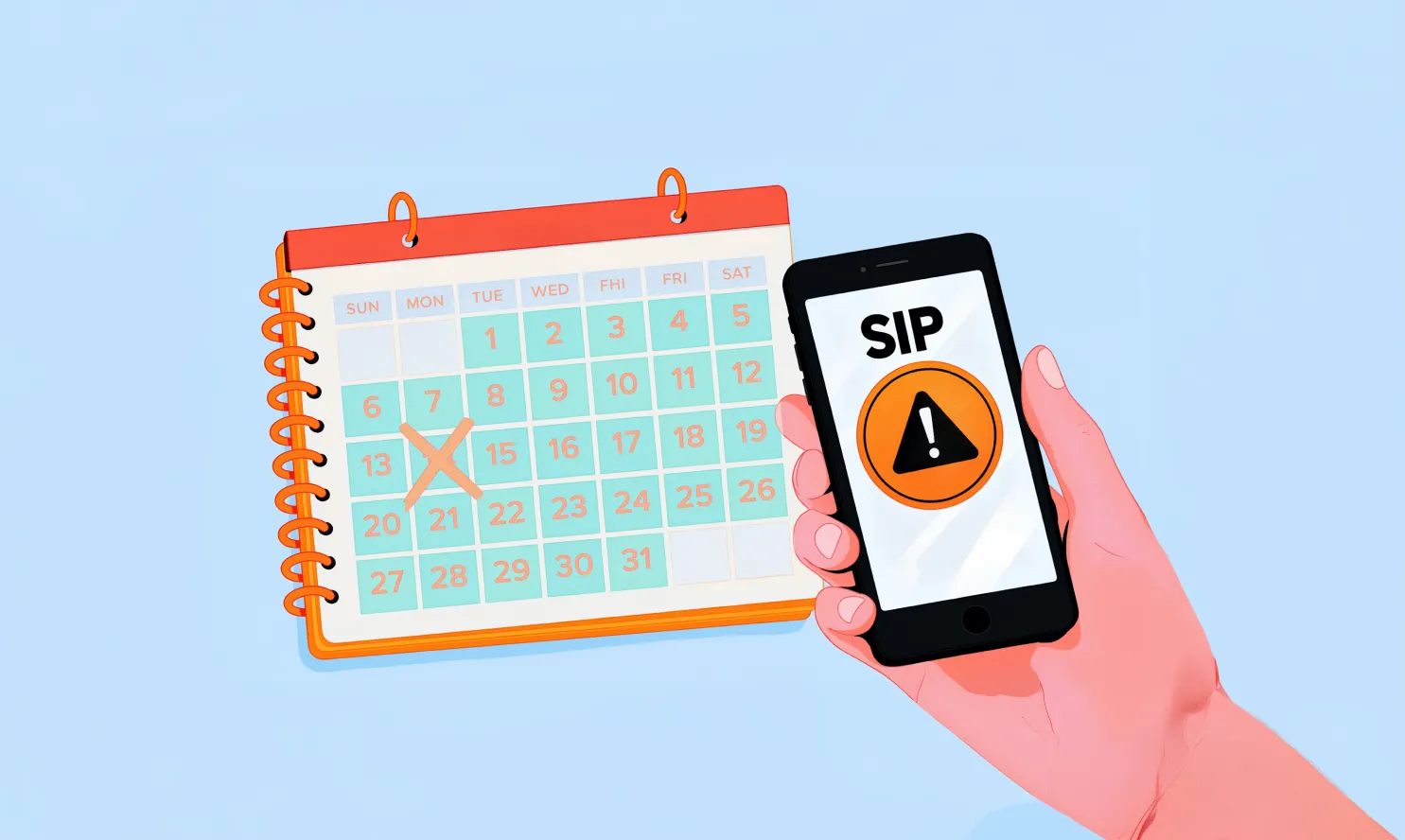
An SIP bounce charge is a fee charged by your bank when the SIP amount fails to deduct due to low balance. The term ‘bounce’ comes from the banking world. When you write someone a cheque but don’t have enough cash in your bank account, the cheque ‘bounces’. When it comes to cheques, it is a criminal offence, FYI. Thankfully, it is not the case with a failed SIP instalment.
Your bank simply charges a penalty depending on its rules. Normally, for every failed auto-debit attempt, the bank deducts somewhere between ₹250 and ₹750. So if you have multiple SIPs on the same day, they all might end up adding to the total charge.
Also, the amount charged by your bank can be different from the amount charged by your bestie’s bank. So make sure to check what your bank’s fee structure is before starting an SIP.
What happens if you miss a SIP instalment?
If you miss paying a single SIP instalment, it doesn’t cause much harm. Apart from paying the applicable penalty, you only miss adding new units to your fund. The units purchased in previous months remain untouched. And from the next month onwards, your SIPs resume as usual.
But what if you miss 2 more instalments, back-to-back? Well, in that case, the fund house assumes you want to stop your SIP since you haven’t paid for 3 consecutive months.
Whether you miss a single SIP payment or miss three in a row, your CIBIL score remains completely unaffected. The two are completely different from one another.
What is the amount of penalty?
One thing to note is that mutual fund houses or the investment platforms don’t levy any SIP bounce charges. The entire fee for the failed auto-debit is solely charged by the bank.
If you have multiple SIPs going on and your balance runs out, then the penalty charges can go significantly higher. For example, you have 3 separate SIPs of ₹1,000 that get deducted on the 10th of every month. Your bank account has a low balance and all of them fail. If your bank’s SIP bounce charge is ₹500 per transaction, you’ll end up paying ₹1,500 as a penalty. That’s more money than the one SIP in this case.
Here are the SIP bounce charges for each failed transaction for some common banks:
- State Bank of India: Around ₹250
- HDFC Bank: Around ₹500
- ICICI Bank: Around ₹500
- Axis Bank & Kotak Mahindra Bank: Around ₹500 to ₹750
Note that these charges are subject to change. Please contact the bank linked to your SIP investment to know the latest fee structure.
Common myths about SIP bounce charges
There is a lot of misinformation about SIP bounce charges out there. Here are some of the most common misconceptions you can safely ignore:
- Myth 1: The fund house levies the fine
Fund houses don't charge you a single rupee, nor does the investment platform. The fee is charged by the bank for processing an unsuccessful payment mandate.
- Myth 2: A bounced SIP ruins your CIBIL score
SIP instalment is an investment. It is not an instalment of a loan or a credit card bill that affects your CIBIL score. These transactions are never reported to the credit bureau.
- Myth 3: Missing one instalment cancels your SIP
If you miss one instalment, it will not make much difference apart from the penalty. Your SIP remains active and will resume operating as usual from the next month onwards. It is auto-cancelled only if you miss 3 instalments in a row.
- Myth 4: Penalty is deducted from your investment
The bank cannot deduct SIP bounce charges from your investment amount. The fee is debited directly from your savings bank account itself.
- Myth 5: You will have to pay the missed instalment
When you miss an SIP, it does not remain due. Also, there are no late fee charges involved. You can simply pay the penalty and skip that month’s SIP investment.
How to avoid SIP bounce charges?
Here are a few simple things you can do to avoid getting in a situation where you miss your SIP:
- Choose SIP date wisely: If there’s a particular date on which money gets credited into your account, like salary or pocket money, set the SIP date a couple of days after that.
- Spread multiple instalments: If you invest in multiple schemes, don’t set all the SIPs on the same day. You can spread them across the month, say one on the 7th, the next on the 14th and another on the 21st.
- Use the ‘SIP Pause’ feature: If you’re facing a cash crunch in a particular month, you can simply pause your SIP. This feature is available for free in most mutual fund platforms, including Millions.
- Keep cash in reserve: Maintain an extra balance equal to your SIP amount in the bank account so it can handle SIP auto-debits without any issues.
The bottom line
A missed SIP is a common instance of transaction failure due to a low bank balance. When that happens, your bank may levy SIP bounce charges for an unsuccessful payment mandate. It’s a small hiccup and in no way can it stop your investment journey. When you maintain enough balance, your SIPs resume from the next month onwards.
If you see there’s going to be a cash crunch in a particular month, you can pause your SIPs before the debit date. It's a free feature available on platforms such as Millions. It protects your money from unnecessary SIP bounce charges and keeps your long-term goals intact until you’re ready to resume.